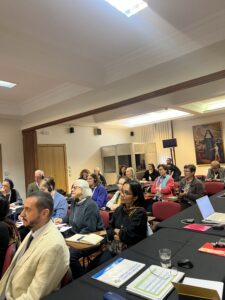
The first day of the RENATE Working Board meeting in Madrid is now well underway, offering a focused and insightful look at how human trafficking is being addressed across Spain.
The day begins with morning prayer, followed by a warm welcome from RENATE Co. Presidents, Sr. Marie Power (HFB) and Ivonne van de Kar. Bishop Javier Vilanova then sets the scene, outlining the role of the Church in responding to trafficking.
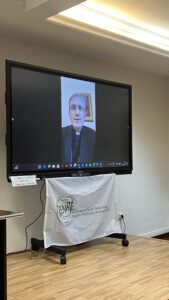
Bishop Javier Vilanova, Bishop responsible for the Department of Human Trafficking of the Spanish Episcopal Conference, “The Spanish Church and Human Trafficking”
The morning’s first panel explores the institutional response of the Spanish state. Contributions from law enforcement and legal representatives highlight both the scale and complexity of trafficking. There is a strong emphasis on the need to address root causes, with a reminder that without awareness and reporting, much of the reality remains hidden. Cooperation across police and government structures is essential, but depends on a deeper understanding of what is happening on the ground.
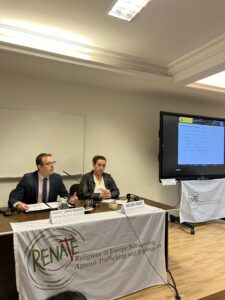
Jesús E. López Román, Head of Section, CITCO, and Nélida Font, Subinspectora, UCRIF Central – National Police “Police investigation and identification of trafficking victims”
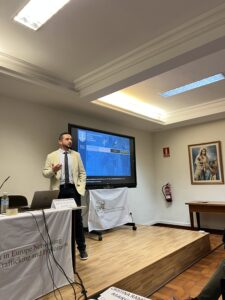
Ignacio de la Torre Peregrín, Corporal 1st Class, Guardia Civil “Trafficking in rural areas and labour exploitation”.
The conversation then moves into the response of Church organisations, where the focus shifts to identification, accompaniment, and advocacy. Speakers underline the links between poverty, migration, and vulnerability, while also drawing attention to newer forms of exploitation, including those taking place online. The importance of sustained, relational support is a consistent thread.
As the group moves into informal conversations and continues the day together, a clear picture is emerging: addressing trafficking requires both coordinated systems and committed human relationships, working side by side.